Community, and Why Halloween is the Best Holiday

Nov 1, 2012

I love halloween. I think it’s my favorite holiday.

The thing that I like about it the most is that it’s one of the only days of the year where you have a reason to go out and meet all of your neighbors. I spent a while last night walking around the neighborhood with Theo and Brieza, having conversations with my nearest neighbors, most of whom I hadn’t spoken to before (we’ve lived in our current place for just over a year). It was really nice.

If you think about it, it’s kind of astonishing the extent to which we typically don’t know our neighbors. I can’t speak for everyone, everywhere, but it seems like a reasonably safe bet that most of us don’t know the vast majority of people who live within a one-block radius of us.

Why is that?

To some extent, it’s probably a deeply rooted sense of fear and privacy.

But I suspect it’s also a practical matter — there just aren’t convenient, socially fluid (i.e., non-awkward) ways to connect with your neighbors. That’s part of why Halloween is so great. It’s a fun, easy, light-touch excuse to walk around and say hi to everyone. No big commitment, no awkward over-staying the moment. In the best case, just enough connection to reasonably say hi to someone next time you see them on the street. For sure this is not a whole lot, but it’s a whole lot more than normal.

Another factor here — and another reason why this is hard — is that you actually need to be really careful making these connections. By and large, these are people you are stuck with for some period of time, so you want to tread carefully and make sure you don’t create a situation that’s weird, or too intense, etc.

So it’s not surprising that no one has cracked the “social network for neighborhoods” problem. It’s hard on a number of levels – the sensitivities mentioned above, the widely varying levels of comfortability with technology, etc. But if you look at the success of platforms like Facebook (networking for colleges) and Yammer (networking for businesses), there is a proven path of starting with an existing community and building a platform from there. So I still think there’s an opportunity here (that folks like CommonPlace, LifeAt, Front Porch Forum and to some extent SeeClickFix and Neighborland are looking at).

Maybe the way to think about this is bringing Halloween to every day? That’s clearly wrong, but maybe there’s something right in it.
Striking the Right Balance

Oct 31, 2012

It’s hard to find the right balance when bringing technology into our lives. I do think lots of us suffer from some form of internet / social media addiction, and it’s getting easier and easier every day to bring all of that with us everywhere we go. This will only continue to accelerate (and I don’t even have Google Glass yet).

A few weeks ago, I went to a discussion at the New York Public Library for Steven Johnson’s new book — for the event, Steven’s “debate” opponent was Sherry Turkle, author of “Alone Together: Why We Expect More From Technology and Less From Each Other“. The thesis of Sherry’s book is essentially that we are all addicted to our phones, and that we’re trading away our real-world connections for distant digital connections. She has spent countless hours interviewing teenagers, observing moms and dads in the playground (with their faces stuffed into their iphones, of course), etc. And basically came away with some troubling, if unsurprising, results.

I am not terrified by all this, but I do think we’re at a moment now where we are still forming our cultural norms around all of this, and it will take a while.

For instance, Frannie and I have a rule of no screens in bed (that includes TV) — it just seems like the bedroom should be a place to unplug, slow down, and relax. But over the past few days while she’s been away, I’ve been breaking the rule. On Sunday night, I blew through my email backlog on my laptop (woo!), and on Monday night I followed #Sandy via Twitter on my phone.

Of course, this sparked an argument discussion last night when I continued to break our rule by bringing my laptop to bed to write “one last email”. To make matters worse (better?) I posted a snap poll to twitter to see what people thought about this particular nuance of digital culture. The results were mixed:

[View the story “Laptops in Bed?” on Storify]

Some great gems in there.

I do think that thinking about this in terms of addiction seems about right — we have this thing with really powerful social pulls drawing us in, and we need to make sure we understand how to live in moderation. I might even argue that the addictive strength of the internet and social media is stronger than that of alcohol or other drugs; at least the social aspect of that addiction. i.e., I may feel some social pressure to drink more than I should, but it’s not coming at me 24×7 from hundreds of friends, thousands of acquaintances, and millions of others.

So, this is something we’ll have to keep figuring out.

Hurricane Sandy

Oct 30, 2012

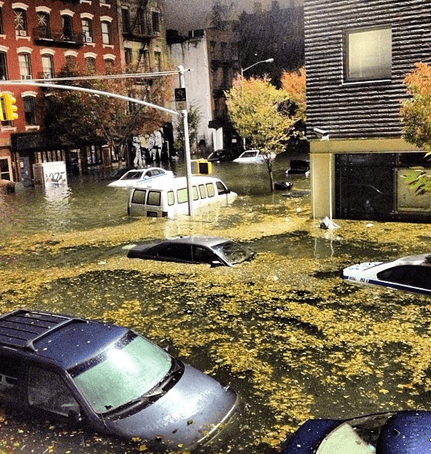
It’s really hard for me to comprehend what happened in NYC last night.

Everyone I know is safe and sound, and the overall death toll is amazingly low given the severity of what happened. But man, what a hit the city took. The aftermath is going to be long and painful.

I was also blown away yesterday by the difference between the coverage of the hurricane on TV and the coverage on social media. I spent all day with family mostly watching local (in Boston) TV coverage — and then later in the evening I switched to following on twitter. It blew me away how much more real the stories coming from twitter felt. And it actually made me mad, somehow, at the TV networks. Maybe that’s now fair, but it’s how it made me feel last night.

On a positive note, I’m so proud to see a lot of activity around #hurricanehackers – an ad-hoc group of techies (led by Sascha Costanza-Chock from the MIT Center for Civic Media) that have been working nonstop all weekend to use tech & information to support the relief effort (including systematizing responses to help requests sent in to #sandyaid, and making a crowd-sourced timeline of events). If you’re technically minded and looking to help, checking in w/ hurricane hackers is a great way to do it.

As hard as it has been to watch something like this happen to my home city from a distance, it’s at least somewhat comforting knowing that the infrastructure we have in place is making helping out easier, from wherever we are.

// photo of flooded East Village by jesseandgreg on instagram, via BuzzFeedAndrew.

The Right to Resell

Oct 29, 2012

Just one of the many stories to get overshadowed by #frankenstorm today is the opening arguments of Kirtsaeng vs. Wiley in the Supreme Court. This case will test whether we (as in, citizens of the US) have the right to re-sell items which may contain copyrighted components that were originally sold overseas. So, for instance, an iPad that contains copyrighted software, or even a house that contains parts with copyrighted text or designs on them.

Joe Mullin at Ars Technica is calling this the Intellectual Property case of the decade.

Marvin Ammori has a detailed writeup in the Atlantic from earlier this summer.

Demand Progress is launching a campaign today.

I’ve been getting slightly mixed reviews from legal folks I know regarding the importance of this. Is it, as Joe suggests, the IP case of the decade, or will this just make some limited set of commercial transactions more difficult. For those with the inclination, the 30 Amicus briefs filed on the case should make good reading.

The one thing I know is that it rubs me wrong that the content industry keeps trying to have their cake and eat it too re: ownership rights. It’s all about owners rights when we’re talking about fighting piracy, but “it’s really just a lease” when consumers buy stuff.

Analog + Digital, Revisited

Oct 27, 2012

I’m still frustrated with how book buying works.

Totally randomly, we ended up watching the Tom Wolfe documentary on TV Friday night. It was really great — incredible to get a behind-the-scenes look at how he operates. He is clearly a master of the interview and a master researcher. He has an incredible way of making people feel comfortable and getting people to like him and talk to him. Nearly every one of the folks from Miami he worked with in preparing his new book spoke glowingly of him. And it was great to get a peek into how he learns a place — from the small details of a house or neighborhood, to the larger political & social currents.

Anyway, it was cool. You can catch the trailer here:

I’ve actually never read any of his books, if you can believe that (though I obv know many of the stories). And after seeing this, I realized I wanted to read all of them. A great project to embark on. So, now what? What do I buy? Kindle/ebook or hardcover?

I feel so stuck, because I love a physical library — even just seeing the spines of books I’ve read or want to read is meaningful. But I also like being able to read digitally (especially because I travel a lot).

Then, this morning, I realized that there is one place in my life where the analog/digital divide is handled perfectly: with the NY Times. We have a Sunday paper subscription, which also includes digital access. So I read the times almost every day on my phone, and then get to spread out with the actual paper on Sunday, which is so nice. I pay about $30/mo for this, which seems like a great deal to me. It strikes just the right balance — I get my daily digital fix, but I also get to engage analog-ly, which is really nice given how much of my life is spent looking at a screen. It’s so different reading a physical paper vs. reading on the phone, especially when it’s Sunday morning and you’re hanging around the house with other people.

I really want something like this for books. I feel like I should get an e-book for free (or for a small additional fee) when I buy a paper book. If this were the case, I’d almost certainly buy more books, and would enjoy them more.