Chromecast: First Impressions

Aug 19, 2013

When we got home from vacation last night, my new Chromecast was sitting waiting for me. I’ve been really psyched to try it out.

The out-of-the-box experience was clear and simple. My favorite thing about Chromecast is how small it is — it’s barely there; just a tiny little add-on to web-enable your TV.

The installation and setup were smooth, with one major exception: the first time through, my setup failed, citing a mysterious UPnP error, and a vaguely worded message to “check my router settings”. Being a geeky person, I (a) knew that that meant going to 192.168.1.1 to get to the router config, (b) was able to remember / figure out the username and password for my router and (c) hunted around for the Universal Plug and Play settings until I found what looked like the right one. My guess is that all of the above would be a deal breaker for 99.5% of consumers.

Once I got through that, I played around a bit with mirroring my computer screen to the TV (just like you can do with Airplay), and playing some web videos on the TV (including this video from the awesome Smarter Every Day series, showing an AK-47 firing underwater at 27,000 frames per second, to illustrate the physics of it — the explanation of the pressure forces about 2 minutes in is stellar).

I’m excited about this — I’m pretty sure this is not **the** answer to bringing the internet to TVs, but it’s a nice step on the road. A few things come to mind as tough problems:

* getting past having to switch “inputs” on the TV. This is another super clunky step that I’m sure loses a ton of people (and certainly just makes this content feel “farther away” and just out of reach of my regular routine. It would be awesome if TVs provided an API to let apps / devices control the input. I have no idea how that works but I’m almost certain it’s not possible now.

* being able to queue content I see on the web to my TV for viewing later. That was my favorite feature of the old Boxee.

* the config steps (as mentioned above). Also: in my case, relying on my broadband / TV provider, Verizon, actually allowing me to access and change those settings. This kind of thing is disruptive to traditional TV and I could easily imagine combo broadband / tv providers clamping down to protect the legacy TV business.

Relatedly: I hung out with a friend last week who is a writer / producer at The Onion, and asked him how many of their video views came from people watching on TVs (vs computers or mobile devices). He had no idea and it sounds like it’s not something they track, or even think about very much. I guess it makes sense, given how early this all is, and given the relative clunkiness of the web / tv integrations thus far. But man, it seems clear to me that this is where we’re headed, and I think & hope it’ll be good for independent content outlets like the Onion and others.
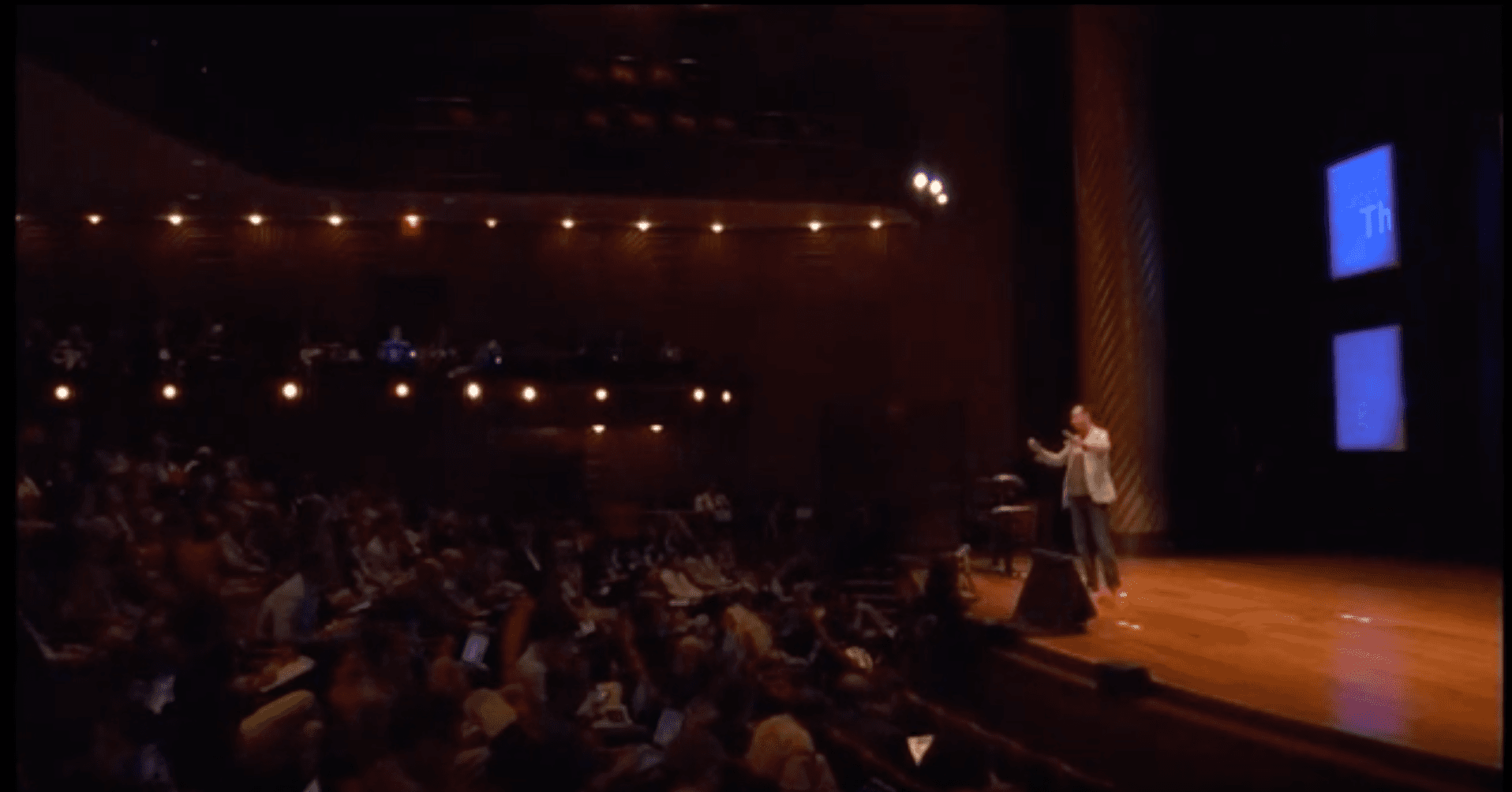
PDF NYC: Powered By Us: Architecting Policy for a Connected World

Jun 7, 2013

Yesterday I gave a talk at this year’s Personal Democracy Forum. For those who don’t know it, PDF is a great event, and is now in its 10th year of bringing together the community of folks working at the intersection of tech, politics, and civics. You can see all the talks from yesterday (and today’s videos will be posted tomorrow) on PDF’s youtube channel.

I was paired up with Robin Chase (co-founder of Zipcar and Buzzcar) to talk about the opportunity and challenges presented by the “peer economy”. Robin introduced the opportunity and I followed up with the challenges (and some ideas for addressing them).

This is a topic I’ve been spending a lot of time on — with the team at USV, companies in the USV portfolio, and many other companies in the peer-to-peer sector.

As is apparent to everyone following tech news, there has been a ton of activity, both positive and negative, in this space. It’s new, and it challenges many fundamental notions of professionalism, person-to-person relationships, and regulation. We’ve got a lot to figure out.

Here is the video of my talk:

And here are the slides.

Kudos: many thanks to the folks at the Berkman Center who helped me find examples of our historical responses to new user-empowering technologies, to Arun Sundararajan for his consistently insightful work on these issues, and to the folks from Sidecar, RelayRides, Etsy and Airbnb for giving their input to the talk.

Enjoy!

History’s Best Innovation Death-Knell Quotes

Jun 3, 2013

I am working on my presentation for this week’s Personal Democracy Forum, which is looking to be a great event.

My talk is entitled: “Powered by Us: Architecting Policy for a Connected World”, and I’m going to be talking about the policy implications of peer networks on the web. We can think of “the peer economy” or ”the indie web” or ”powered by us” platforms as a subset of the internet at large. It’s a sector that’s growing fast and running into all kinds of trouble along the way.

Part of what I will talk about is the historical phenomenon of incumbent industries (incorrectly) predicting doomsday as new technologies and business models emerge. One of the most famous examples here is when Jack Valenti, former head of the MPAA (movie industry lobby) declared in 1982 that the VCR would be the end of the movie industry. He said (seriously):

“I say to you that the VCR is to the American film producer and the American public as the Boston strangler is to the woman home alone.”

Of course, this turned out not to be the case. Home videos instead turned into a major new revenue stream for the movie business. But that didn’t stop the the issue from going all the way to the Supreme Court, which declared video copying for personal use legal. This decision, known as “the betamax case” laid a critical foundation for user-empowering technologies that followed.

I’m looking for a few more examples like this: times when a new technology — in particular one that grants individuals new and awesome powers — was greeted with (ultimately) false claims of impending doom. Here’s one list of now-silly tech predictions (not necessarily doomsday-related), and a few years ago Mike Masnick at techdirt wrote up this great list of historical overreactions to copyright issues.

I’d like to find more like this, but beyond copyright as a subject area. If anyone’s out there: what are your favorites?

Open Data

May 28, 2013

Open data is a huge driver of innovation. Traveling around NYC is better because the MTA opens up route, schedule and real-time data for people to build apps with. Responding to natural disasters is easier when data is open and interoperable. As we continue to collect more data about ourselves and our environments, from how we learn to how we sleep, to how much energy we use, the possibilities for building on top of it are literally endless.

Most of the work I’ve done in open data has had to do with the government — getting the government to “think like a platform” and open up data. There is always resistance — opening data means relinquishing control and handing over power. But, generally speaking, “government” has become more and more open to these ideas (for example, see the US recently issued a new open data executive order [PDF]).

But of course, there is a whole other side of open data. The data that we produce, and companies collect, as we traverse the web and the world. The times ran an article this weekend on the paradox of personal data: companies collect data about you, use it internally and re-sell it to marketers, but most times they won’t give it back to you:

“OUR mobile carriers know our locations: where our phones travel during working hours and leisure time, where they reside overnight when we sleep. Verizon Wireless even sells demographic profiles of customer groups — including ZIP codes for where they “live, work, shop and more” — to marketers. But when I called my wireless providers, Verizon and T-Mobile, last week in search of data on my comings and goings, call-center agents told me that their companies didn’t share customers’ own location logs with them without a subpoena.”

I fully expect old, stodgy companies like Verizon and National Grid not to get this. And it makes sense that big internet companies like Google and Facebook are afraid of giving users access to “what they have on them”

It’s a fair question who “owns” data that users create (directly and indirectly) as they use web and mobile services. On the one hand, there would be no data if the users didn’t do the things that produce it! On the other hand, platforms and companies invest huge sums to architect the experiences that make these activities (and by extension, the act of collecting the data) possible. That’s true whether you’re Verizon, Google or Foursquare — there would similarly be no data if the platforms didn’t exist and didn’t build systems to collect it. So there is a shared interest here.

But it seems like a huge, huge opportunity for emerging companies that are gathering user data and haven’t yet built sketchy complex business models monetizing that data. Giving users open access to that data — in the form of APIs — would not only benefit users by letting them do more with their data, it would also build trust. I am way more likely to entrust my data with a company when I know they are going to share it back with me openly.

Of course, opening up this data carries risks — security (privacy breaches, identity theft) and the potential for users to leave your service more easily among them. But my gut is that the benefits will outweigh the risks and platforms that embrace user access to data become more valuable and more beloved for it.

Antifragility

May 25, 2013

At Albert’s suggestion, I’ve started reading Nicholas Taleb’s Antifragile.

It really is a powerful idea to think of things that get better with stress, not worse. And it’s really interesting to think about how to build antifragility into your life in various ways.

Here’s one (tiny) example: email. I hate email and I am bad at it. I am constantly in email debt.

It gets worse when I get busy and when I travel a lot. Things like conferences give me an excuse to ignore email for a day or two, so I do.

But what if there was a way to get better at email, the busier you are?

One way of achieving that is to do email by phone only. High turnover, limited depth. The limitations on typing speed on the phone actually make it easier to do more email, not harder (in many cases, not all).

Anyway, that’s just one tiny example. Will keep thinking about more.