This weekend, we hosted a BBQ at our house as part of the Summer of Internet Freedom. Internet Freedom is nice and all, but really, it was just an excuse to fire up a batch of burger dogs.
What’s a burger dog? I’m glad you asked.
A burger dog is delicious snack that solves two critical problems: 1) Burgers are too big. Especially at BBQs with lots of delicious food, burgers should be snacks, not meals. And 2) you should only have to buy one kind of bun, really. And since hot dogs will never fit on a hamburger bun, there you have it.
So, a burger dog is a small hamburger made to fit in a hot dog bun. It’s really quite good. Here’s how you do it:
1) Make the patties.
Start with a small handful, roll it roughly to the shape of a hot dog, and then flatten it out by slapping it gently with your fingers and shaping the edges. As a guide, a properly sized burger dog, pre-cooked, should take up the width of your first three fingers, and extend from the your fingertips down to the inside of your palm. Pre-cooked, a burger dog is maybe 1/5 of a pound (my 3 lbs of ground beef produced 15 burger dogs).
2) Grill it.
Since burger dogs are relatively thin, you don’t need to grill them for very long. Over a medium-high heat, I grill for several minutes, without flipping, until the juices start to come through the top. Then, a single flip. Then, grill for a few more minutes, adding 1/2 slice of american cheese (or a whole slice, cut in half and then staggered lengthwise, if you’re feeling cheesy) at the end.
3) Deck it out.
The most important topping for a burger dog is a sandwich-sliced kosher pickle. They (magically) happen to be exactly the length of a hot dog bun. I also prepare tomatoes and onions — half-cut, then sliced thinly. This one has everything:
4) Enjoy.
So delicious! And since they’re small, you can totally have two! Our hand model is none other than Jake Shapiro, proprietor of Public Radio Exchange (and fellow lover of Internet Freedom).
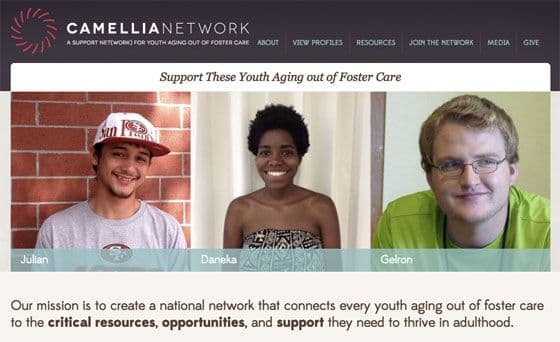
The Camellia Network is an organization that exists to support youth who are aging out of the foster system.
It’s a new organization, just passing its first year, and yesterday they launched their revamped web platform. Camellia is a new kind of support organization — rather than provide services directly, their approach is to build a network of support and resources around the individuals who will be leaving the foster system.
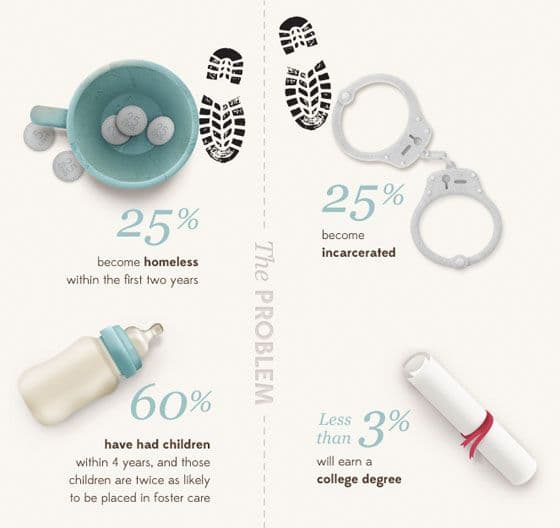
It’s an incredibly serious and challenging situation: the Foster system in the US provides support for some of the least resourced young people in the country — and when they leave the system (at age 18 in most states), they essentially lose whatever support system they’ve had. Imagine heading into the world on your 18th birthday with no parents, no resources and no support network. It’s really quite hard to imagine, and understandably, the results are not good (from the Camellia website):
Camellia’s approach is to build a support network that youth leaving the foster system can tap into. To help give them access to people, opportunities, financial resources, and unknown other sorts of support — in a way that isn’t possible to do using existing institutional infrastructure, and ideally, in a way that scales.
I think it’s a smart approach, one that aims to take advantage of the network dynamics we’re seeing in other sectors. So I really hope they’re able to make it work.
Here are things you can do, today, which are all quite easy and will be meaningful:
Head over to Camellia and meet the youth that are already in the network. Each person has a profile with some information about who they are, how they see the world, and what they’re hoping to achieve. Simply posting a message of encouragement on someone’s public profile is a meaningful act. And meeting these people face-to-face and hearing even small details about their perspective is really powerful.
Buy something from one of the gift registries — each person in the network has a small gift registry of things they need to get started. It’s really easy to add a few to your cart and help out that way. You don’t have to spend a lot of money to help out this way.
Add yourself to the network of supporters. This is effectively raising your hand to say “I’m here and I’m willing to help if I can”. You’ll get a public profile which says a little bit about you, and gives youth in the system a way to contact you. Here’s mine.
Register your organization as an opportunity partner. Opportunity partner organizations and companies offer special opportunities to youth in the network — for instance: informational interviews, discounts on consumer products, donations of goods or services, etc. This is just getting going, so there is an opportunity to be creative here.
Lastly, it’s interesting to note that everything on the site happens online, and in public. This is important, and one of the ways the network is working to head off the potential for predatory or illicit interactions. I know they’ve spent a lot of time considering the challenges and risks of operating a service like this, and from an outsider’s point of view (and as someone who studies how web platforms work), it’s really interesting to watch how they’re handling this, and how it evolves over time.
I’ve been friends with the folks behind Camellia for some time, and my wife is working with them this year as part of her doctoral work. I’ll be helping however I can as they get going. So please spread the ord, take a few small steps to engage with the network, and please send along any feedback or ideas here.
I have been intrigued recently by apps that give a new spin on what have previously been stock features of the phone. Apps that a) improve upon in minor ways or b) really try and re-invent some of the basic things we do every day.
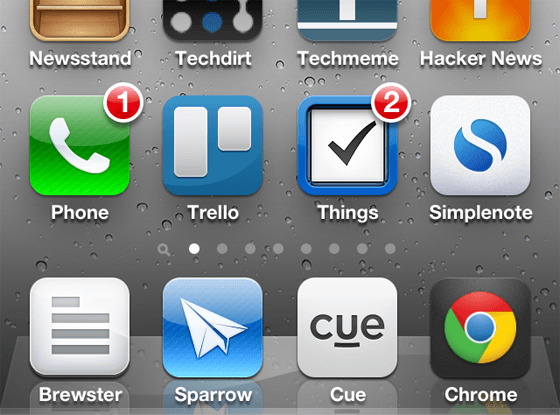
Above is a snapshot of my new “home row”. Sort of — I say sort of because this isn’t actually working for me, yet, and I’ll explain why in a sec.
Brewster is an app that I think of as a “launcher for people” — their goal is to be the fastest, most intuitive, way to initiate contact with anyone, regardless of mode. It takes your contacts, twitter followers, facebook friends, etc, and makes it easy to find who you want to find and then contact them how you want to contact them (via SMS, phone, twitter, etc). I really like the idea of flipping the paradigm to “people first, mode second”, vs how it is now: mode first (twitter, sms, etc), then person.
I love the potential of Brewster, but it hasn’t made it into my routine yet, for a few reasons: 1) speed. It simply takes too long to fire up — the whole appeal of this app, to me, is that it’s the fastest, easiest way to find someone. For that to work, it actually needs to be the fastest and easiest. I would love it if they optimized the app startup process so that I see faces (ideally the best faces) super quickly. 2) intelligence. Part of the promise of Brewster is to cut through the hundreds of people I’m connected to and surface the ones I’m most likely to want to contact. Since I’ve authed them into my gmail, twitter and facebook, and they can see what’s in my phone, I would expect them to do a better job of this, but it’s not quite there yet. 3) A few bits of clunky UI — the Brewster UI is all hand-rolled, so it doesn’t feel native to iOS, and there have been a few times where that’s lead me to make some mistakes (for instance, canceling edits on a contact when I thought I was saving them). I assume this is to make cross-platform development easier, and I expect it to improve over time. But as it is now, it’s not quite as easy to use as I would like or expect.
Sparrow is a really nice email client for mac and iOS. The’ve made a lot of subtle improvements over iOS Mail, which I won’t go into detail on since it’s been widely blogged about. The feature that made me switch was search — Sparrow’s search is so much better than iOS Mail search, and searching email is something I do a lot. Sparrow has been my daily mail client for a while now. They were just acquired by Google, so there’s some concern in the user community about what will happen to the app. For my part I’m not worried; it’s great how it is now.
Cue is the one I’m most excited about. It’s the next generation of what was Greplin, a search appliance across all of your web accounts. They’ve pivoted and the idea now is to “cue up your day” with a super-charged daily agenda that draws from your calendar(s), mail, twitter, facebook, etc. This is a radical, socially-powered, reinvention of the calendar, and I really really like the idea. And the job they’ve done executing so far is really nice. There is so much potential here, really (think: surfacing important to-dos, linking to bios of people I am meeting with today, giving me travel information a la TripIt, etc.).
However, there is one simple problem which is stopping me from using the app completely: by default (and this is unchangeable), it draws appointments from every google calendar that has been shared with you. For me, that’s about 50 calendars. So my cue is full of seemingly random events from calendars that aren’t part of my real day. I tweeted this feedback their way and got a response that they’re working on this, and I hope they prioritize it, because it’s a make or break feature for me (and I must assume it’s the same for many others).
Last, but not least is Chrome for iOS. I’m a big fan of Chrome for mac, and my Chrome is totally tricked out with extensions and customizations that make it really work for me. In starting to use Chrome for iOS, the one feature that’s come in most handy is google login and shared history — makes it really easy for me to access sites from my computer’s browsing history when I’m on my phone. This is a super nice feature, especially on mobile where typing is annoying. Of course, the big problem here is that you can’t make Chrome your default iOS browser, so whenever you launch a link from another app, or from a home screen shortcut (I use several), you end up back in Safari. Boo, Apple, for not making this configurable. The solution here is to jailbreak my phone, which I just haven’t gotten around to doing yet.
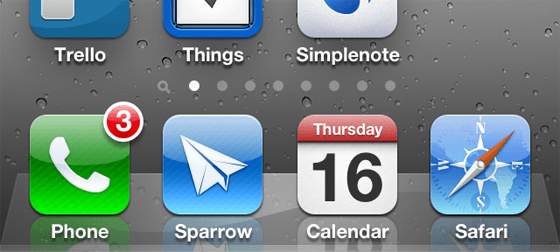
So, that’s about it — lots of potential here, but some hurdles as well. The screenshot above is what I want my home screen to look like. Here’s what it actually looks like now:
This week we are out in Cape Cod with Frannie’s family, hanging out at the beach in Truro (where, incidentally, there was a shark attack a few weeks ago). This week, we’re renting a different house than normal — it’s an old run-down house next door to the cottages where Fran’s family has vacationed forever, that was fixed up into rentable shape over the winter.
Last night, as everyone was sleeping, a loud alarm went off. A few minutes later, it went off again. It woke us up and we started investigating. It turns out it was the smoke / carbon monoxide detector.
We were a bit freaked out, because of carbon monoxide’s reputation as the “silent killer” — we didn’t smell any smoke and couldn’t detect anything out of the ordinary, but we also couldn’t explain why the alarm was going off.
Most importantly and disturbingly, neither of us knew what to do when the carbon monoxide detector went off. Do we call the fire department? Press reset? Call the person we’re renting the house from (who is 200 miles away and sleeping?) How do we know this isn’t just a bad battery? Ultimately, I pressed the “test / reset” button (that’s what you’re supposed to do, right?) and the intermittent alarm stopped, but we weren’t even sure how to tell what that meant.
We didn’t know any of the answers. So, in the midst of a mild panic about the kids asphyxiating in their bedrooms, we turned to Google. We searched to try and figure out what exactly you’re supposed to do when that alarm actually does go off. Turns out a lot of people have the same question. I looked all over, and even ended up in a PDF of the product manual for a detector — amazingly, the whole manual has only one short paragraph on what to do when the alarm goes off.
Eventually, we came across some information (somewhere; I can’t remember) saying that in cases of power surges or interruption, the alarms can go off — and I remembered that the lights in the living room had been flickering the night before. And to, in these cases, press reset to stop the beeping and wait to see if the alarm resumes. If not, then don’t worry. Ultimately, this answer worked for us, and we were able to get over the scare and try and get back to sleep.
But the whole experience was kind of dumbfounding. The fact that we really had no idea what to do in case of alarm — how to tell a real emergency from a false alarm (especially when I’ve changed the batteries in 5 smoke detectors in my in-laws’ house in the past few months to stop the beeping). How to interpret the beeps; who to call; what to do. What good is an alarm if you’re not sure what to do when it goes off? It made me really appreciate all those fire drills we did as kids in school.
All in all, it reminds me of the (old?) saying in computer land — having backup procedures is good, but what you really need are restore procedures. A backup is no good if you aren’t sure you can use it or don’t know how.
This week we are out in Cape Cod with Frannie's family, hanging out at the beach in Truro (where, incidentally, there was a shark attack a few weeks ago). This week, we're renting a different house than normal -- it's an old run-down house next door to the cottages where Fran's family has vacationed forever, that was fixed up into rentable shape over the winter. Last night, as everyone was sleeping, a loud alarm went off. A few minutes later, it went off again. It woke us up and we started investigating. It turns out it was the smoke / carbon monoxide detector. We were a bit freaked out, because of carbon monoxide's reputation as the "silent killer" -- we didn't smell any smoke and couldn't detect anything out of the ordinary, but we also couldn't explain why the alarm was going off. Most importantly and disturbingly, neither of us knew what to do when the carbon monoxide detector went off. Do we call the fire department? Press reset? Call the person we're renting the house from (who is 200 miles away and sleeping?) How do we know this isn't just a bad battery? Ultimately, I pressed the "test / reset" button (that's what you're supposed to do, right?) and the intermittent alarm stopped, but we weren't even sure how to tell what that meant. We didn't know any of the answers. So, in the midst of a mild panic about the kids asphyxiating in their bedrooms, we turned to Google. We searched to try and figure out what exactly you're supposed to do when that alarm actually does go off. Turns out a lot of people have the same question. I looked all over, and even ended up in a PDF of the product manual for a detector -- amazingly, the whole manual has only one short paragraph on what to do when the alarm goes off. Eventually, we came across some information (somewhere; I can't remember) saying that in cases of power surges or interruption, the alarms can go off -- and I remembered that the lights in the living room had been flickering the night before. And to, in these cases, press reset to stop the beeping and wait to see if the alarm resumes. If not, then don't worry. Ultimately, this answer worked for us, and we were able to get over the scare and try and get back to sleep. But the whole experience was kind of dumbfounding. The fact that we really had no idea what to do in case of alarm -- how to tell a real emergency from a false alarm (especially when I've changed the batteries in 5 smoke detectors in my in-laws' house in the past few months to stop the beeping). How to interpret the beeps; who to call; what to do. What good is an alarm if you're not sure what to do when it goes off? It made me really appreciate all those fire drills we did as kids in school. All in all, it reminds me of the (old?) saying in computer land -- having backup procedures is good, but what you really need are restore procedures. A backup is no good if you aren't sure you can use it or don't know how.