Even though I shouldn’t own a car, I do, and as every car owner in NYC knows, dealing with alternate-side parking is a hassle.
That, combined with my recent itch to write a small mobile app, has lead me to the following idea: the “Dude, Where’s My Car?” app for mobile. Here’s what it will do:
When I park my car, I’ll open the app, and it will prompt me to enter where I’ve parked. I’ll enter “Warren” under “Street” and “Smith & Hoyt” under “Between”. Or maybe I’ll click on a map. This seems like a silly step, but if you’re like me, it’ll come in handy four days later when you forget where you parked.
The app home screen will show the car’s location, either in text or map form.
Then, the app will query the Alternate Side Parking Calendar, and show if alternate side is in effect for the next few days.
For bonus points, it will send me a text or email the night before I need to move the car.
I plan on trying to make this for blackberry, since that’s how I roll, but of course it would be sexier on the iPhone. Maybe I’ll try out PhoneGap and kill two birds with one stone.
(I know some people have already been thinking about this problem, so I may be able to recruit some help)
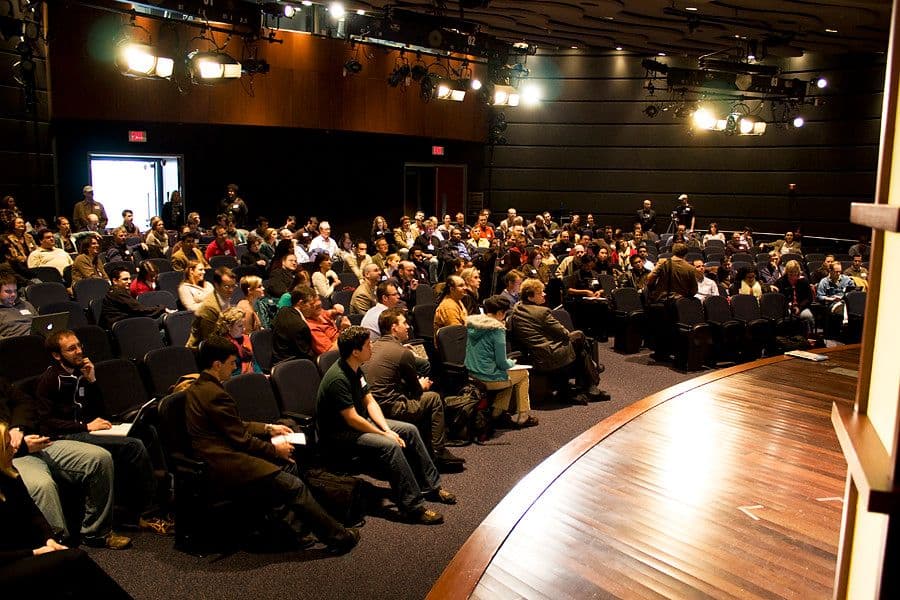
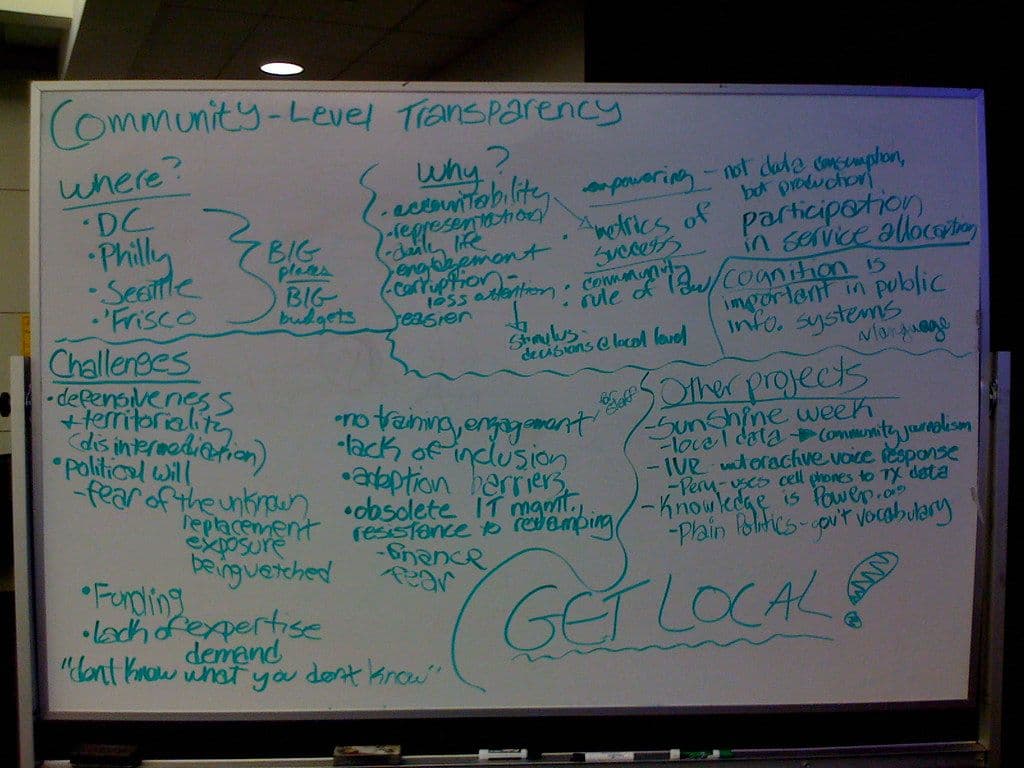
This past weekend, Phil Ashlock and I headed down to DC to participate in TransparencyCamp, a BarCamp event put on by the Sunlight Foundation. We spent two days with ~200 open government and transparency advocates from all sectors — government, non-profit, tech, etc. All in all, it was a pretty amazing event — great people and good sessions. We learned about some cool projects, met a ton of people, spread the word about TOPP, and basically got our transparency on. Here are some of my really quick takeaways, in no particular order:
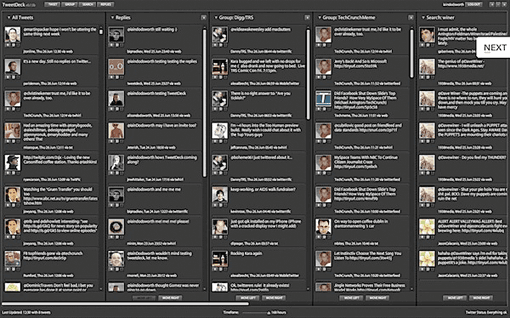
Tech people love twitter. The whole weekend was basically a giant twitter party. Walking around any session, pretty much every single person’s screen looked like this:
In case you’re wondering, that is TweetDeck, an all-powerful Twitter client. Using TweetDeck, you can follow conversations along twitter hashtags just like you’d follow conversation in an IRC channel. Amazingly, the ~200 people at TCamp pushed #tcamp09 to be the #1 Twitter search term for the weekend. So every session was two conversations at once — one in person and the other via tweets. The tweet stream also served as live, distributed note-taking, and is probably more rich than the wiki in terms of content.
Open Government and Transparency are a really big deal. If you don’t know, now you know. This was evidenced by the big, high-quality crowd — folks from major federal agencies, the Obama campaign, Recovery.gov, Tim O’Reilly, Craig Newmark, just to name a few — and by the tangible sense of community and excitement. The train has left the station and everybody is along for the ride. Andrew Hoppin is breaking new ground at the NYS Senate, Sunlight is driving the transparency bus (to continue the transit metaphors), and events are happening at rapid-fire pace (like Government 2.0 Camp next month).
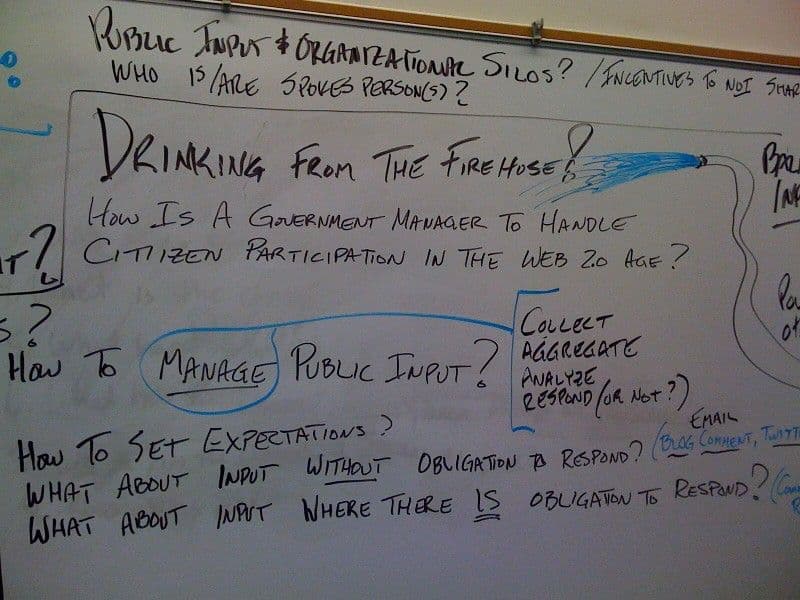
Governments are just learning how to handle it all. One session was called “Drinking from the Firehose,” where the firehose is the potentially overwhelming stream of constituent feedback that can come in once you open the spigot. For agencies that are already under-staffed and generally not as web-comfortable as the private sector, this can be a lot to handle. Getting it right can require a pretty significant re-thinking of government->citizen communication — most importantly, this means managing constituent expectations, and empowering more people in an agency to be communicators. Other potential solutions included encouraging more citizen-to-citizen communcations (w/ gov acting as a router), prioritizing questions and responding in bulk (like NH power did via twitter during the big winter storm), etc. etc.
Many “government 2.0 sites” are actually rethinking core concepts of government. I am no political scientist, but it’s clear that technology is leading the way in exploring twists on representative democracy as we know it. Projects like WhiteHouse2, MetaGovernment and YourOwnDemocracy are exploring new ways of employing citizen preference (voting) to impact decision-making.
Transparency has many levels, and starting at the source is the best. For example, Recovery.gov is collecting and aggregating info from all recipients of federal stimulus/bailout money. They will then be republishing it all in machine readable format. However, this introduces a layer of abstraction, and in strict terms, an opportunity for corruption. Transparency advocates push for access to data at the source — in this case, directly from each individual recipient. This is, of course, not practical at the moment, and many new transparency-related services are doing the hard work of transforming the data to make it accessible (in a geoserver-ish kind of way).
There are many policy barriers to transparency, and they’re not just technical. The actual government employees at tcamp expounded on the internal bureaucratic hurdles to transparency. While the larger tech community is tackling the strictly technical issues (such as formats and standards), many of those inside government are working to reform 20th century policies that make transparency difficult to achieve.
Government transparency and civic engagement go hand in hand. One line I overheard that I really liked was: “a ‘push’ government can encourage relevant contributions from citizens by providing relevant data.” I think there’s something really powerful in that, and somewhere in there is a core idea for TOPP and TOPP Labs. If we are interested in encouraging citizen participation and empowering individuals, the opening up of government data will be a core component. It’s my theory that there’s a huge latent demand for participation, but that people just don’t know how or don’t have the right ways to engage. The proliferation of civic data that’s on the way should provide ample seed for interesting citizen engagement projects.
Distributed systems need a way to cooperate. Of course, a huge challenge here, that’s not unique to government — information and accounts are siloed across systems. A lot of the conversations at TCamp focused on ways to share data across systems. There was talk of OpenID, OAuth, microformats, DiSo, semantic web, and all the others. One of the more interesting presentations was on the potential civic uses for the semantic web. Joshua Tauberer of GovTrack.us keeps a piece of the Linked Open Data cloud in his data store, and can do pretty impressive queries of distributed data regarding federal legislation, lawmakers, campaign contributions, etc.
Ok, that’s about it for my little brain dump, for now. I’ll leave you with some photos of the event after the jump:
Over at TOPP, we’ve been talking recently about the “spectrum of engagement” — in other words, providing a variety of ways that people can engage with a website, ranging from quick & easy (e.g., thumbs-up-ing something) to slow and involved (e.g., writing a blog post or signing up for an account). It’s obviously important to give people opportunities to engage at whatever effort/thought level works for them at a given time.
Along these lines, we’ve been talking about the role of “structured inputs” in facilitating various types of interactions. Interactions that are quick & easy are often (but don’t necessarily have to be) more structured — for example, signing a petition, filling out a multiple choice survey, or marking yourself as a “fan” of something. Of course, there is a tradeoff here — when you impose structure, you make things easy at the expense of flexibility and power. More open systems offer often limitless possibilities (think of all the ways you could use a wiki), but usually take a more invested set of power users to explore these and set cultural conventions (think twitter hashtags).
Another downside of too much structure, that I encountered today, is that it can often result in an abundance of meaningless data. Let me give an example:
An example: In what will likely prove a fit of hopeless optimism, I’m going to buy a pull-up bar for our bedroom door. As it turns out, there are a lot of options — bars that screw in to walls, bars that use horizontal tension (like a curtain rod), and big multipurpose bars for pushups, situps, and pullups. I think I want the kind that doesn’t screw in, and I know I don’t want a big piece of equipment. So, the question is, which is the best one? Where to go but to the customer reviews. And finally, to my point.
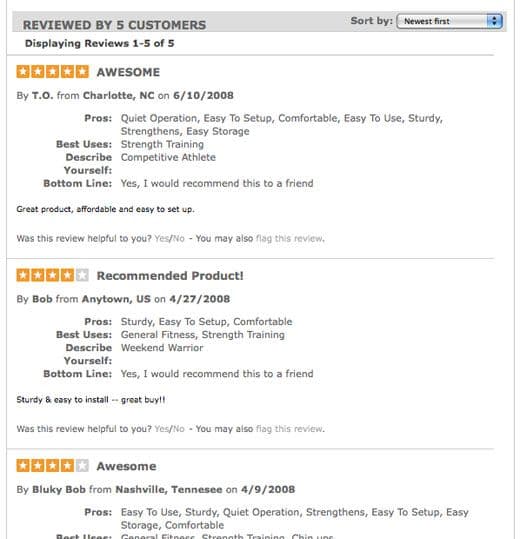
First stop: Dick’s Sporting Goods. As I flipped through the reviews I noticed that they all used many of the same words, and that none of them really said very much.
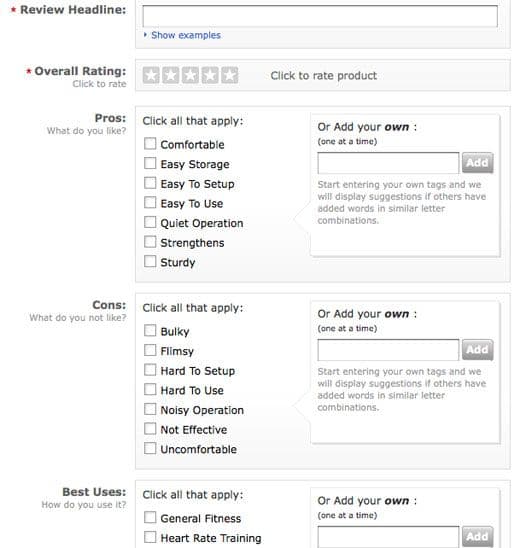
Lo and behold, they provide a structured form for feedback, complete with checkbox suggestions for “pros” and “cons”.
So, instead of actually writing anything meaningful, they just check a few boxes and are done with it. There is a general comments field, but apparently no one takes the time to fill it out once they’ve checked those boxes off. In the end, this approach attempts to make things easy for the reporter, but the end result for the next shopper is a set of reviews that really don’t say much.
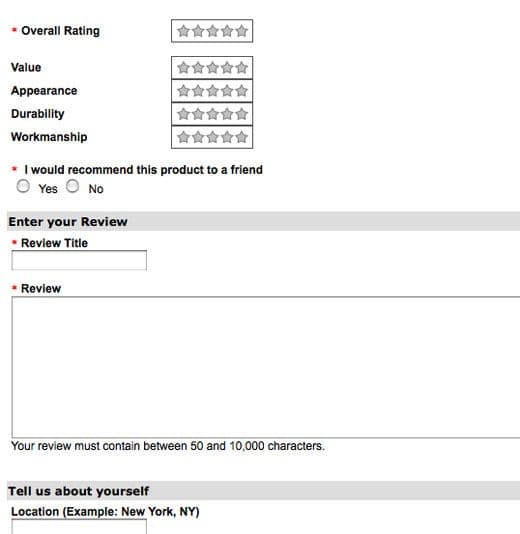
Looking at the overstock review form, you see a different story. Rather than pre-thinking for the reviewers, they ask for ratings on general quality and then a detailed description.
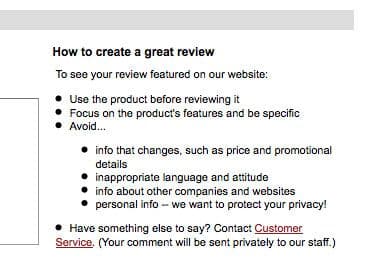
In addition, they provide instructions on how to write a great review. These instructions also imply that bad reviews won’t be featured on the site, introducing another mechanism of motivation — getting your review published.
This week, TOPP moved into additional, (maybe) temporary office space, to alleviate some of the crowding at our office in the West Village. We were looking for a place that was convenient, comfortable, and most of all, available immediately (backstory is that we’ve been basically sitting on top of each other at our W. 12th Street offices for the last few months, while our new space at 148 Lafayette is being renovated — it’s ridiculous, I know…)
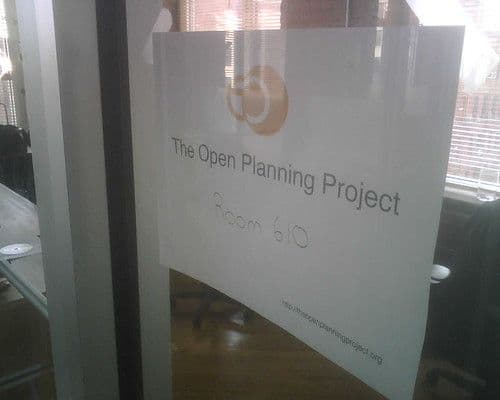
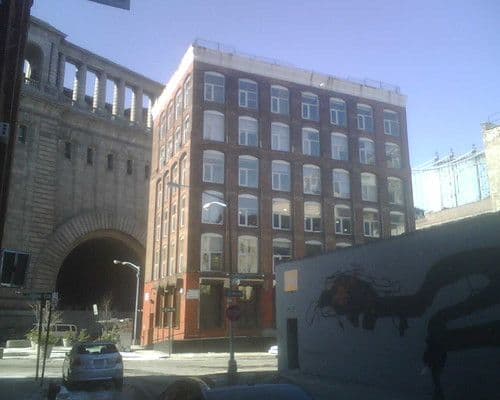
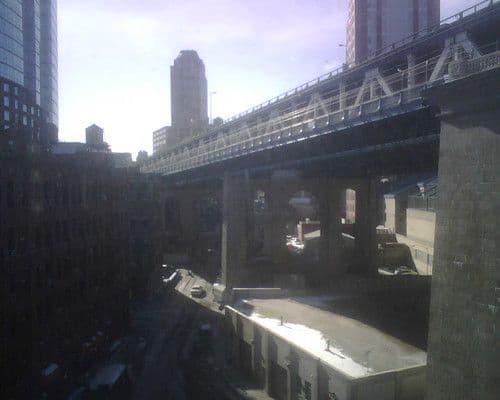
Anyway, we found a GREAT space at a new-ish office incubator in DUMBO called Green Desk. It’s a renovated 6-story warehouse building right at the foot of the Manhattan Bridge. Each floor consists of a bunch of glassed-in offices which are home to various companies. Gothamist is on the floor right below us. Most of the folks from the Livable Streets Initiative and GothamSchools, and some of the OpenGeo team will be working from here now.
I’ve been reading and thinking a lot about office space lately, mainly spurred by our own impending move as well as Fog Creek Software’s recent move to new digs. Having read Joel Spolsky’s writing about the importance of private & quiet office space, I’ve been getting a little concerned about the open plan of the office we’re about to move into. I visited the Fog Creek offices last Friday for their new office open house, and was impressed by the combination of highly social space (kitchen, lunch tables, couches) and super-quiet workspace (private, glassed-in office for every single developer). As a result, we at TOPP have been trying to subtly improve the layout (within reason, since construction is about to start and our concerns aren’t the only ones — the space will also be the future home of Tower Research Capital) of the new office to increase the amount of available private/quiet space, even if the floor plan is fundamentally open.
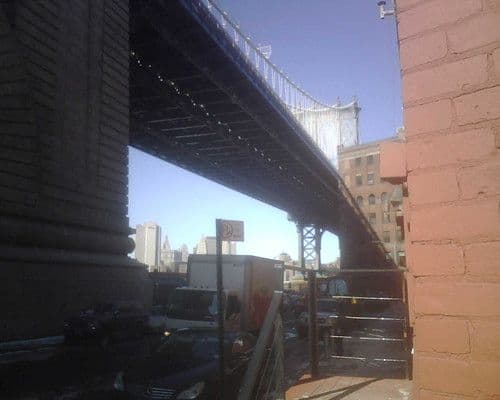
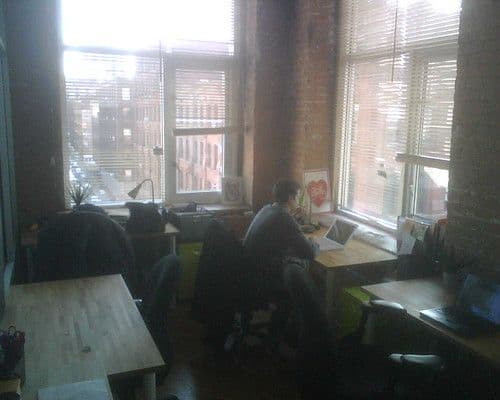
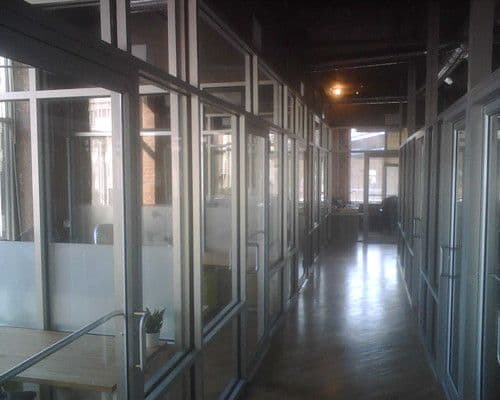
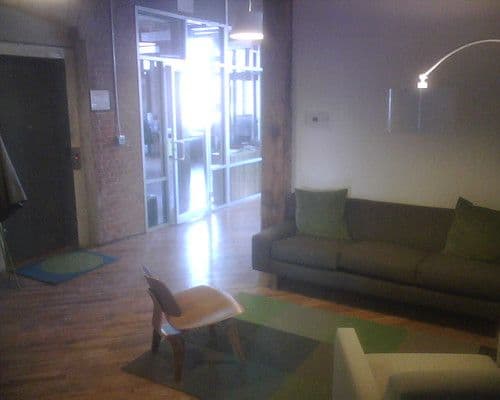
Anyway, I digress. So, I’m sitting here at Green Desk for the first time today, and it’s really quite nice. We can hear the sound of the subway rolling over our heads as it crosses the Manhattan Bridge, but it’s kind of like waves crashing and isn’t really disturbing. We have four separate glassed-in rooms, each with about 4 desks, and there’s a shared conference room, kitchen, and sitting area. Apparently there’s also a proper cafeteria and exercise room on the way. It’s also nice to be in a space with other companies, although I haven’t met anyone just yet.
Here are some photos. Even though I will continue to work primarily from the Manhattan office, I think I’ll plan to spend a day or so per week down here for a change of pace, and for the joy of walking to work and not leaving Brooklyn :)
Above: Green Desk building at 155 Water Street
Above: View from the front door, facing the river and Manhattan